RFID security problems
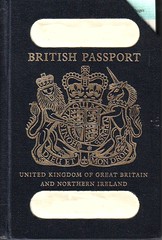

2005
From Brian Krebs’ “Leaving Las Vegas: So Long DefCon and Blackhat” (The Washington Post: 1 August 2005):
DefCon 13 also was notable for being the location where two new world records were set — both involved shooting certain electronic signals unprecedented distances. Los Angeles-based Flexilis set the world record for transmitting data to and from a “passive” radio frequency identification (RFID) card — covering a distance of more than 69 feet. (Active RFID — the kind being integrated into foreign passports, for example — differs from passive RFID in that it emits its own magnetic signal and can only be detected from a much shorter distance.)
…
The second record set this year at DefCon was pulled off by some teens from Cincinnati, who broke the world record they set last year by building a device capable of maintaining an unamplified, 11-megabit 802.11b wireless Internet connection over a distance of 125 miles (the network actually spanned from Utah into Nevada).
From Andrew Brandt’s “Black Hat, Lynn Settle with Cisco, ISS” (PC World: 29 July 2005):
Security researcher Kevin Mahaffey makes a final adjustment to a series of radio antennas; Mahaffey used the directional antennas in a demonstration during his presentation, “Long Range RFID and its Security Implications.” Mahaffey and two of his colleagues demonstrated how he could increase the “read range” of radio frequency identification (RF) tags from the typical four to six inches to approximately 50 feet. Mahaffey said the tags could be read at a longer distance, but he wanted to perform the demonstration in the room where he gave the presentation, and that was the greatest distance within the room that he could demonstrate. RFID tags such as the one Mahaffey tested will begin to appear in U.S. passports later this year or next year.
2006
From Joris Evers and Declan McCullagh’s “Researchers: E-passports pose security risk” (CNET: 5 August 2006):
At a pair of security conferences here, researchers demonstrated that passports equipped with radio frequency identification (RFID) tags can be cloned with a laptop equipped with a $200 RFID reader and a similarly inexpensive smart card writer. In addition, they suggested that RFID tags embedded in travel documents could identify U.S. passports from a distance, possibly letting terrorists use them as a trigger for explosives.
At the Black Hat conference, Lukas Grunwald, a researcher with DN-Systems in Hildesheim, Germany, demonstrated that he could copy data stored in an RFID tag from his passport and write the data to a smart card equipped with an RFID chip.
From Kim Zetter’s “Hackers Clone E-Passports” (Wired: 3 August 2006):
In a demonstration for Wired News, Grunwald placed his passport on top of an official passport-inspection RFID reader used for border control. He obtained the reader by ordering it from the maker — Walluf, Germany-based ACG Identification Technologies — but says someone could easily make their own for about $200 just by adding an antenna to a standard RFID reader.
He then launched a program that border patrol stations use to read the passports — called Golden Reader Tool and made by secunet Security Networks — and within four seconds, the data from the passport chip appeared on screen in the Golden Reader template.
Grunwald then prepared a sample blank passport page embedded with an RFID tag by placing it on the reader — which can also act as a writer — and burning in the ICAO layout, so that the basic structure of the chip matched that of an official passport.
As the final step, he used a program that he and a partner designed two years ago, called RFDump, to program the new chip with the copied information.
The result was a blank document that looks, to electronic passport readers, like the original passport.
Although he can clone the tag, Grunwald says it’s not possible, as far as he can tell, to change data on the chip, such as the name or birth date, without being detected. That’s because the passport uses cryptographic hashes to authenticate the data.
…
Grunwald’s technique requires a counterfeiter to have physical possession of the original passport for a time. A forger could not surreptitiously clone a passport in a traveler’s pocket or purse because of a built-in privacy feature called Basic Access Control that requires officials to unlock a passport’s RFID chip before reading it. The chip can only be unlocked with a unique key derived from the machine-readable data printed on the passport’s page.
To produce a clone, Grunwald has to program his copycat chip to answer to the key printed on the new passport. Alternatively, he can program the clone to dispense with Basic Access Control, which is an optional feature in the specification.
…
As planned, U.S. e-passports will contain a web of metal fiber embedded in the front cover of the documents to shield them from unauthorized readers. Though Basic Access Control would keep the chip from yielding useful information to attackers, it would still announce its presence to anyone with the right equipment. The government added the shielding after privacy activists expressed worries that a terrorist could simply point a reader at a crowd and identify foreign travelers.
In theory, with metal fibers in the front cover, nobody can sniff out the presence of an e-passport that’s closed. But [Kevin Mahaffey and John Hering of Flexilis] demonstrated in their video how even if a passport opens only half an inch — such as it might if placed in a purse or backpack — it can reveal itself to a reader at least two feet away.
…
In addition to cloning passport chips, Grunwald has been able to clone RFID ticket cards used by students at universities to buy cafeteria meals and add money to the balance on the cards.
He and his partners were also able to crash RFID-enabled alarm systems designed to sound when an intruder breaks a window or door to gain entry. Such systems require workers to pass an RFID card over a reader to turn the system on and off. Grunwald found that by manipulating data on the RFID chip he could crash the system, opening the way for a thief to break into the building through a window or door.
And they were able to clone and manipulate RFID tags used in hotel room key cards and corporate access cards and create a master key card to open every room in a hotel, office or other facility. He was able, for example, to clone Mifare, the most commonly used key-access system, designed by Philips Electronics. To create a master key he simply needed two or three key cards for different rooms to determine the structure of the cards. Of the 10 different types of RFID systems he examined that were being used in hotels, none used encryption.
Many of the card systems that did use encryption failed to change the default key that manufacturers program into the access card system before shipping, or they used sample keys that the manufacturer includes in instructions sent with the cards. Grunwald and his partners created a dictionary database of all the sample keys they found in such literature (much of which they found accidentally published on purchasers’ websites) to conduct what’s known as a dictionary attack. When attacking a new access card system, their RFDump program would search the list until it found the key that unlocked a card’s encryption.
“I was really surprised we were able to open about 75 percent of all the cards we collected,” he says.
2009
From Thomas Ricker’s “Video: Hacker war drives San Francisco cloning RFID passports” (Engadget: 2 February 2009):
Using a $250 Motorola RFID reader and antenna connected to his laptop, Chris recently drove around San Francisco reading RFID tags from passports, driver licenses, and other identity documents. In just 20 minutes, he found and cloned the passports of two very unaware US citizens.
RFID security problems Read More »